


Google Search is learning to answer before sending a user anywhere. That creates an obvious risk for publishers: a useful answer can keep a person on Google. It also creates an investor question: can Google still make money if it sends fewer people to the rest of the web?
An initial comparison says yes. Search & other revenue reached $63.35 billion in Alphabet’s latest quarter, up 12% year over year. But Q3 details add nuance: paid clicks rose 8%, cost per click rose 4%, and Alphabet’s chief financial officer acknowledged that rapid growth in AI Mode queries weighed on Search monetization because AI Mode was monetizing below traditional Search.
Those facts can coexist. Search revenue, query growth, advertiser economics, and referral traffic are different measures. Google’s AI search could remain popular even if each AI query generates less revenue today—provided that more commercial activity and better ad formats eventually close the gap. Alphabet has not yet reported enough product-level data to show whether that is happening.
1. Search is becoming an answer engine
For years, Google’s search results page acted as a map. A person asked a question, saw links, and decided which site to visit. AI Overviews now place a generated summary inside that page. AI Mode goes further: it turns Search into a conversational experience where people can ask follow-up questions and make longer, more detailed requests.
The distinction matters. An AI Overview changes the layout of a familiar results page. AI Mode changes the interaction itself. In the third quarter, Google said queries in AI Mode were growing strongly, but acknowledged that those queries were currently monetizing below traditional Search. The company is now testing and scaling ads across both experiences.
That creates a two-sided test for Alphabet. It must give users a reason to ask more questions, while giving advertisers a reason to keep paying for the resulting attention. And it must do so without making the outside websites that supply information less willing or able to participate.
2. Search revenue is still growing
Alphabet’s latest quarter does not look like a business in immediate retreat. Google Search and other revenue reached $63.35 billion in the quarter ended September 30, up 12% from a year earlier. Alphabet’s total revenue grew 25%. Search & other still represented about half of the company’s $127.6 billion in quarterly revenue, using the company’s reported figures.
The underlying Search indicators help explain the growth. Paid clicks rose 8% year over year and cost per click rose 4%. Alphabet says these measures are affected by advertiser spending, product changes, device mix, and changes in how people use Search. They are company-wide Search results, not separate readings for AI Mode or AI Overviews.
The figures support two conclusions. Google is still generating more paid activity and more revenue per click across Search overall. They do not tell us whether AI search is performing as well as traditional Search, because Alphabet has not published those same measures separately for its AI experiences.
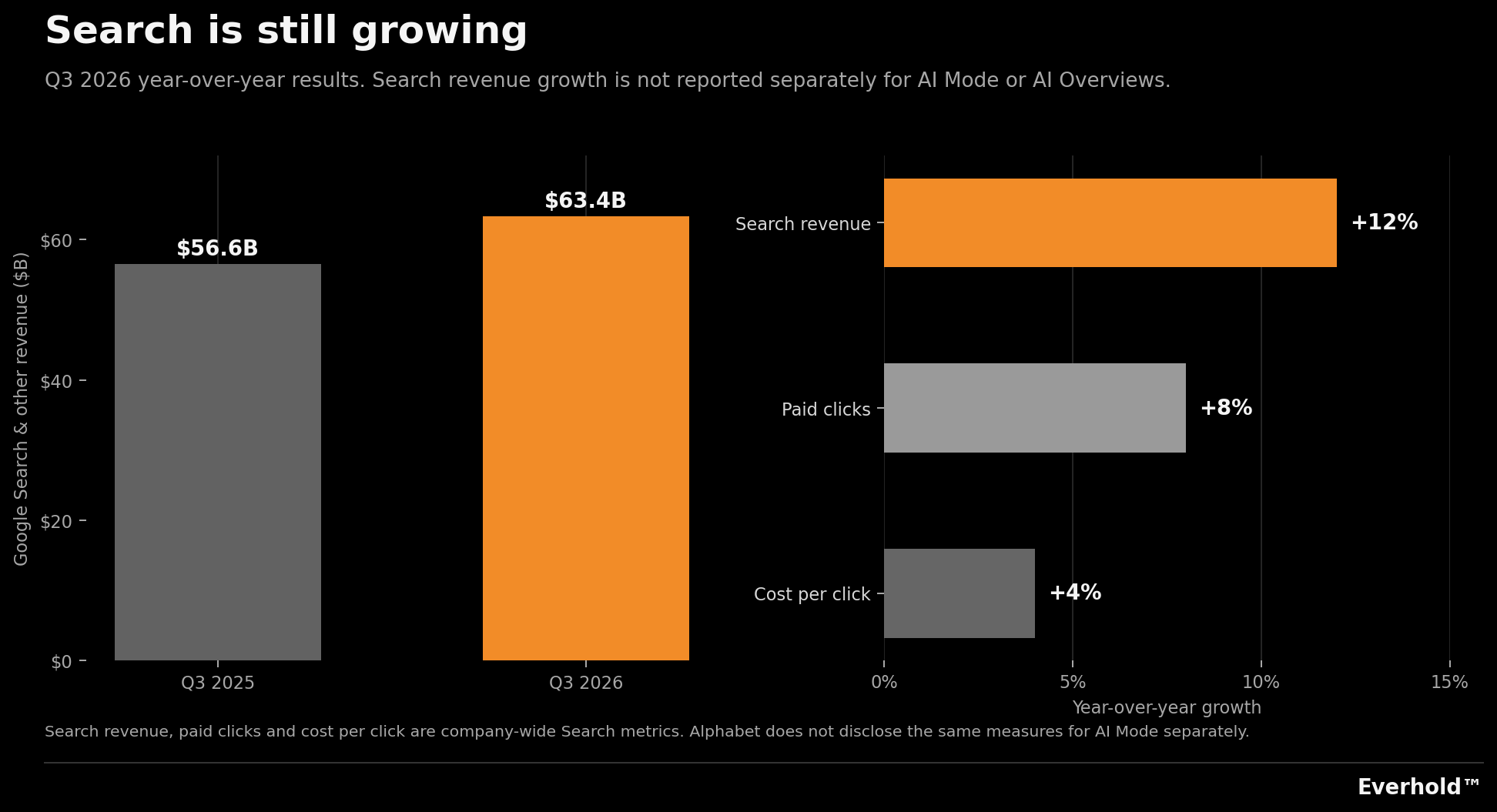
FIGURE 1 Search revenue, paid clicks, and cost per click grew in Q3 2026. Alphabet does not break those figures out for AI Mode or AI Overviews.
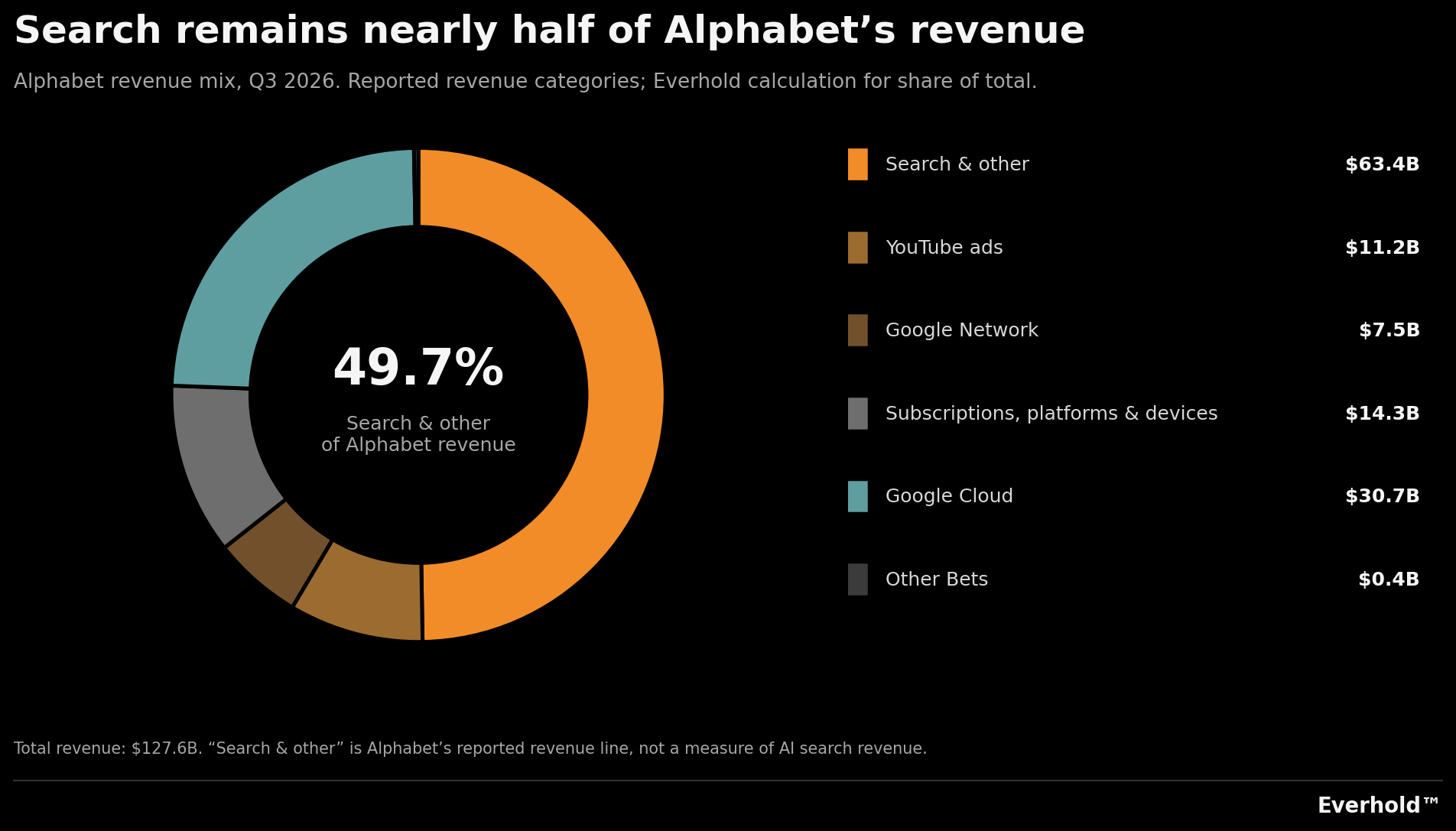
FIGURE 2 Search & other represented about half of Alphabet’s reported revenue in the third quarter.
3. A click to a website is not the same as a click on an ad
The public debate often treats every click as the same. It is not. A person may click a paid ad, click an unpaid result, follow a citation inside an AI summary, or stay on Google and continue searching. Each action has different economics for Alphabet and for the website that may have supplied the information.
Pew Research Center’s analysis of browsing activity from March 2025 offers an early look at what happens after an AI Overview appears. Across its panel of 900 U.S. adults and 68,879 Google searches, users clicked a traditional search result in 8% of visits when an AI summary appeared, versus 15% when it did not. They clicked a link cited in the AI summary in 1% of visits. The study also found that sessions ended after 26% of pages with an AI summary, compared with 16% of pages without one.
Those figures should be read carefully. The study covers a limited U.S. panel, reflects search pages observed in 2025, and predates the current scale of AI Mode. It measures clicks to sites, not paid clicks or Google’s advertising revenue. It cannot establish that AI Overviews reduced Google’s ad economics. It does show why publishers worry: a summary can satisfy a user’s question while sending fewer visits to the sources.
That may be a problem for the wider web even if it is not yet a problem for Google’s quarterly revenue. Google can keep a user on its own page, show ads there, and potentially benefit from additional searches. The long-term risk is whether less referral traffic weakens the incentive to create and maintain the original material Search depends on.
4. Google has acknowledged the monetization gap
The most useful disclosure came from Alphabet’s own earnings call. Management said the growth in AI Mode queries had weighed on Search monetization because AI Mode was monetizing at a lower rate. It also said ad experiments were showing promise and that Google was expanding ads within AI Overviews and AI Mode.
That admission should not be exaggerated. It does not mean AI Mode is unprofitable, that it is reducing total Search revenue, or that AI Overviews have the same economics as AI Mode. In the prior quarter, Alphabet said it remained encouraged by monetization on queries that show AI Overviews. The two products have different user experiences and may have different advertising performance.
Google’s argument for the opportunity is that AI features encourage more questions, including commercial searches that people might not have made before. Alphabet has described AI Mode queries as longer and more specific, which could help it match ads to intent. Management has also said most AI Mode queries are incremental. Those are company claims about the product’s direction; public reporting does not yet let investors verify the revenue or profit per AI Mode query.
The central issue is not simply whether people click less often. It is whether Google can create enough valuable commercial activity in AI Search to make up for lower monetization per query today.
5. The cost of the answer matters too
AI answers require computing capacity. Alphabet spent $132 billion on capital expenditures in the first nine months of 2026, compared with $63.6 billion in the same period a year earlier. The company reported $51.4 billion of capex in the third quarter and said full-year 2026 spending would be $195 billion to $205 billion. It expects investment to rise significantly again in 2027.
This is company-wide infrastructure spending. Alphabet says its capital investments include servers, network equipment, data-center land, and construction. The spending supports Search, Google Cloud, Gemini, and other services; it cannot be assigned to AI Search alone. The company also expects higher depreciation and data-center operating costs, including energy, as new infrastructure comes online.
The scale raises a practical investor question: can the additional revenue generated by AI services cover both the cost of serving queries and the long-term cost of building capacity? Alphabet has not disclosed the inference cost or contribution margin for AI Mode. Search revenue growth alone cannot answer that question.
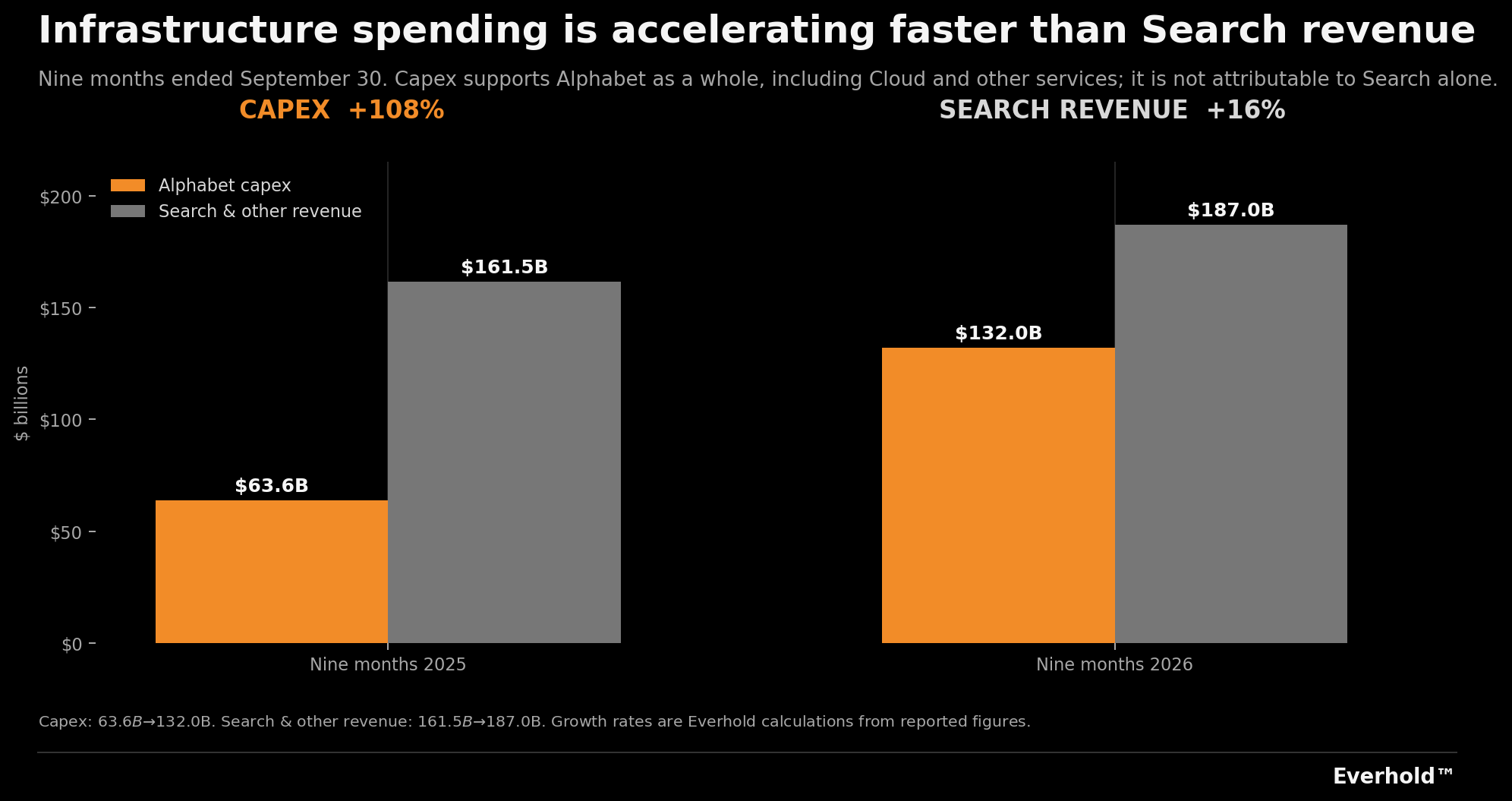
FIGURE 3 Alphabet’s capital investment grew much faster than Search revenue over the first nine months of 2026. Capex supports the whole company.
6. Search is only one part of Google’s AI economics
Alphabet is trying to earn returns on AI infrastructure across several businesses. Google Cloud revenue reached $30.7 billion in the third quarter, up 103% year over year. On the earnings call, management said Google Cloud had generated tens of billions of dollars of AI revenue year to date. It also reported a $561 billion Cloud backlog, while expecting near-term margin pressure as it brought additional compute capacity online.
This gives Alphabet more ways to earn from its investment than Search advertising alone. Cloud contracts, subscriptions, advertiser tools, and AI features across products can all contribute. But Cloud growth cannot be used as proof that AI Mode itself has attractive economics. The company’s disclosures combine several products and customer types, leaving the return on individual AI investments difficult to isolate.
For investors, the right question is whether the portfolio of AI businesses can earn attractive returns on the shared infrastructure—not whether one headline growth number justifies the entire investment program.
7. What investors should watch next
Alphabet’s current disclosures give investors a useful starting scorecard, but not a complete one. Search revenue, paid clicks, and cost per click show that the overall business remains healthy. The open question is how much of that performance comes from AI experiences and what those experiences cost to serve.
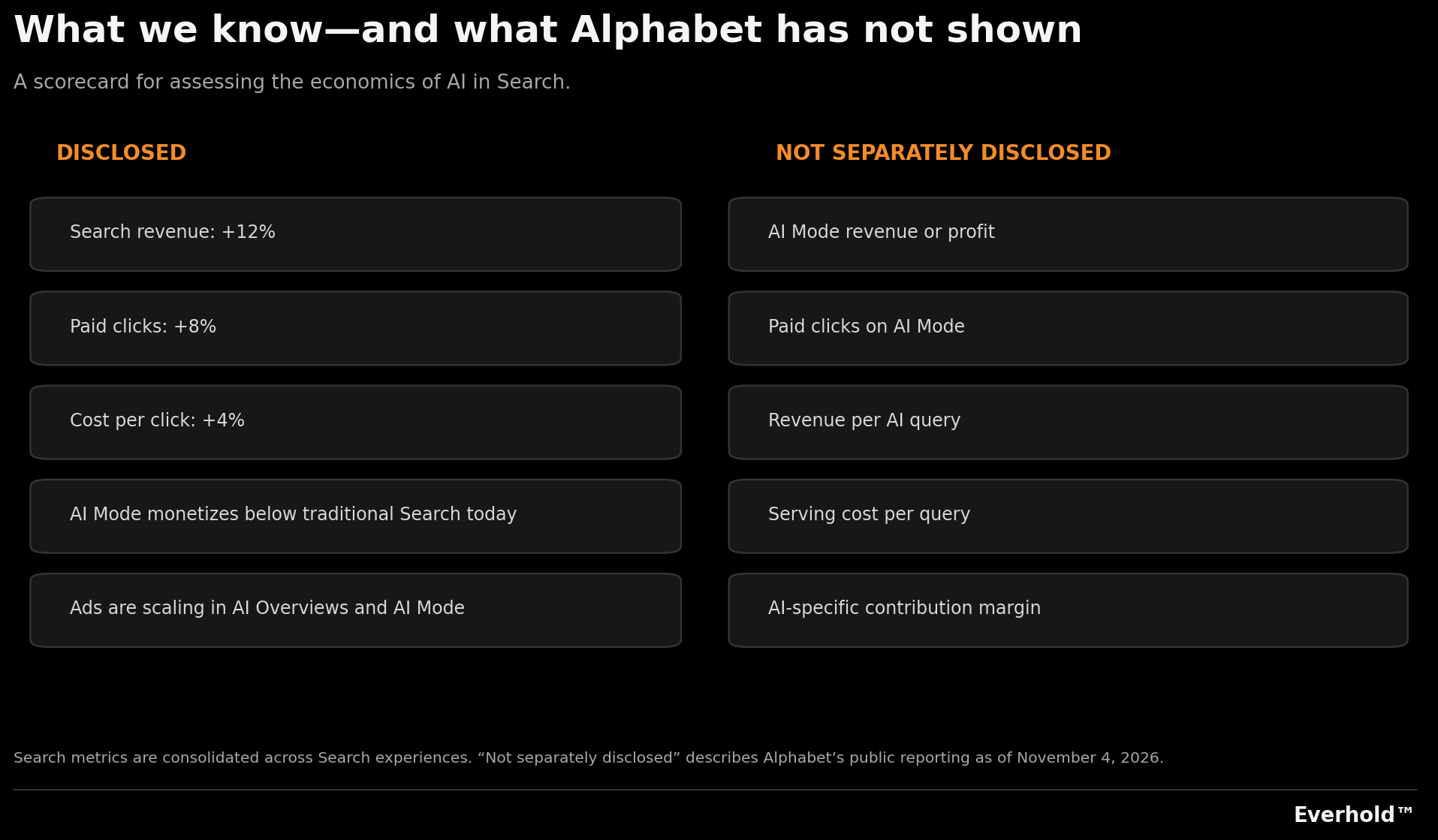
FIGURE 4 Alphabet reports consolidated Search results but not the standalone economics of its AI search products.
Search revenue and paid clicks. Track whether revenue and paid-click growth hold up. These remain blended measures, not AI-only results.
AI Mode monetization. Look for separate disclosure of ads, paid clicks, or revenue per query. At present, management has described monetization as lower than traditional Search.
Serving costs and infrastructure. Watch capex, depreciation, data-center operating expense, and any company disclosure on cost per response.
Traffic to the open web. Separate paid-ad performance from referrals to publishers and other websites. A healthier Search business does not automatically mean a healthier referral ecosystem.
8. The bull case
AI Search makes Google more useful for complex and commercial questions. Users ask more, stay engaged, and increasingly use AI Mode to compare products or plan purchases. Google places relevant ads in those experiences, and improved query understanding produces better outcomes for advertisers. Revenue per query recovers as ad formats mature, while efficiency improvements lower the cost of serving answers. Search remains a powerful cash engine and helps support Alphabet’s broader AI investment.
9. The bear case
Users adopt AI answers because they resolve questions without a visit to an outside site. Search queries may rise, but fewer high-value actions produce paid clicks or transactions. AI Mode remains less monetizable than traditional Search, while serving longer answers requires additional infrastructure. At the same time, publishers and other content providers receive fewer visitors, weakening the ecosystem that helps make Google’s answers useful. Alphabet keeps growing, but the returns on its AI investment fall short of the opportunity cost.
10. The bottom line
Google can answer more questions and still grow Search revenue. In Q3 2026, Search & other revenue increased 12%, paid clicks rose 8%, and cost per click rose 4%. Alphabet also acknowledged the harder part of the transition: AI Mode is currently less monetizable than traditional Search.
That is the tension investors should follow. AI can make Search more useful, expand the number and variety of queries, and give Google new places to show ads. It can also reduce referrals to the web and raise the cost of producing an answer. The company’s current disclosures demonstrate growth and adoption, but do not yet show AI Mode’s revenue per query, serving cost, or contribution margin.
The click is not the whole asset. Google’s more durable advantage is the ability to connect user intent with a useful next action and an advertiser willing to pay for it. The test is whether AI Search improves that connection enough to support both the economics of Google and the information ecosystem around it.
11. Sources and methodology
This analysis uses information available as of November 4, 2026. Alphabet’s Q3 2026 Form 10-Q and earnings call are the primary sources for company revenue, monetization metrics, capital spending, and management commentary. Pew Research Center’s 2025 browsing study is used as an early, limited observation of click behavior after AI Overviews; its findings are not treated as current or as evidence of paid-ad performance.
[1] Alphabet Inc., Form 10-Q for the quarter ended September 30, 2026, filed October 29, 2026. Open source [1]
[2] Alphabet, Q3 2026 Earnings Call transcript, October 28, 2026. Open source [2]
[3] Alphabet, Q2 2026 Earnings Call transcript, July 22, 2026. Open source [3]
[4] Pew Research Center, “Google users are less likely to click on links when an AI summary appears in the results,” July 22, 2025. Open source [4]
[5] Google, “Just ask anything: a seamless new Search experience,” January 27, 2026. Open source [5]
Everhold publishes independent analysis of business economics, competitive advantages, and investment implications. This article is informational and does not constitute a recommendation to buy or sell securities.